|
MrTinned Report
| Issue 2 |
Saturday, 23 May 2026 |
Weekly |
Forwarded by a friend? The weekly report is free. Get your own → |
|
|
The Open
Time KeepingTins.
Some have been canning since before the second world war.
I overheard a husband and wife in a grocery store. He mentions they have sardines at home. Are they still good? she asks. Confidently, he says: they're tinned. He is right, of course and some producers have understood that answer more precisely than others. A tin that's packed in quality olive oil does not simply last. It develops. The proteins soften, the oil penetrates the flesh, the flavors then deepen and concentrate over time. This practice has a name: millésimée in French, vintaging in English, and it has been a thread weaving through the European conservas tradition for well over a century. The condition that Margaret Costa set in 1970 still holds: like wines, if they are good in the first place, they are worth laying down. Pollastrini has been working this way in Anzio since 1889. The only Italian producer still canning Mediterranean sardines, they fish at night from a gozzo, a small wooden boat armed with lamps that draw sardines to the surface in the dark. The fattest catch of each season becomes the millesimate, numbered by harvest year and packed in olive oil. La Perle des Dieux has been releasing annual vintages from Saint-Gilles-Croix-de-Vie in Vendée since 1887, requiring a minimum fat content of twelve percent to qualify, meant to be turned every six months so the oil coats the fish from all sides, aging for up to a decade. In Concarneau, Les Mouettes d'Arvor is the premium line of Conserverie Gonidec, a family business founded in 1959 and the only cannery in that port that is still working by hand, fish is caught off the Brittany coast then transported overnight, cleaned by size and packed before dawn, releasing collector-edition vintages each year with artwork from local artists. Pointe de Penmarc'h was founded in 1920 in Le Guilvinec when over a hundred boats worked the Bigouden coast, they relocated to Douarnenez in 2003, and continue the Penn Sardin tradition of hand-arranging each sardine into the tin. Nuri, the brand of Pinhais in Matosinhos, ages every standard product for a minimum of three months before it leaves the factory, and for the Reserva line they select only the best catch of the year, age it for at least thirty-six months, hand-numbering each tin and limiting production to 2,000 cans per vintage year. Then there's Last Catch, who arrived at this tradition from a totally different direction. A company in Belgrade called River Fish spent years building a technology for canning freshwater fish that did not exist anywhere in Europe. In 2016 they sealed a production run of lightly smoked rainbow trout pulled from Lake Zaovine in Zlatibor. Nobody was thinking about vintaging back then. It was a niche freshwater experiment until the company shut down. Around six thousand cans remain from that single run, nearly a decade old now, developing in ways nobody anticipated when they were sealed. The AllTinned vintaging guide covers the full picture: what ages, what doesn't, and why it works.
|
|
|
One to know
|
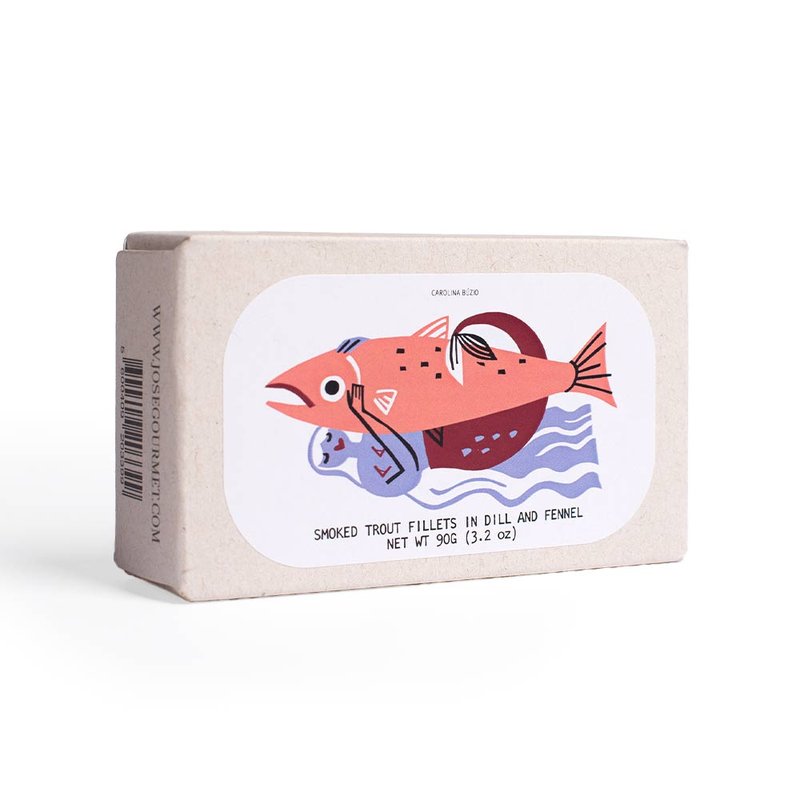
Cold-Smoked Trout Fillets in Dill and Fennel
At Lata: Founded by Spanish friends missing home, sourced straight from small family conservas houses.
Visit store →
|
|
|
|
|
The Database
Here is what happened this week.
|
76
New products
|
194
Restocked
|
54
Price changes
|
|
158
Out of stock
|
54
New brands
|
6
New retailer
|
194 restocks against 158 out of stock. The market is net positive this week. Six new online retailers entered the pipeline: Kerbriant, Conserverie Courtin, La Compagnie Bretonne du Poisson, Galil, Polar, and Community Shellfish, a physical store in Connecticut. 54 new brands in the database, the largest single-week expansion since launch.
|
|
|
The Move

|
FishNook drops Bonito del Norte 55%.
Bonito del Norte is the white tuna of the Cantabrian coast, line-caught and packed whole loin. FishNook dropped it 55 percent this week. At $14.99 it is worth stocking.
$14.99
$32.99
55% OFF
Buy now →Price history and watch →
|
|
|
|
The Tin
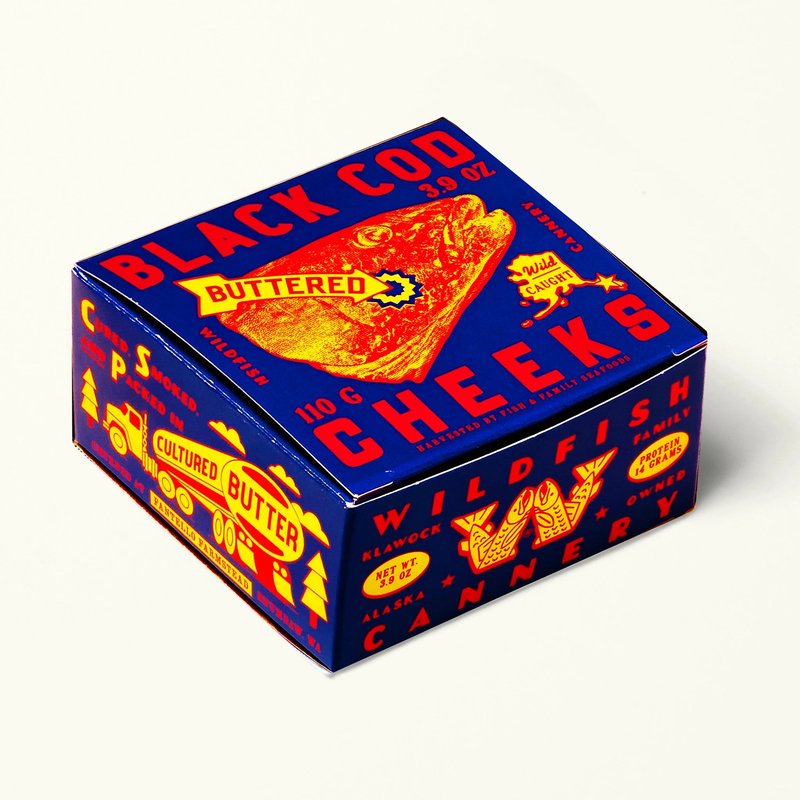
Black Cod Cheeks in Cultured Butter
WILDFISH CANNERY · ALASKA · BLACK COD
Wildfish Cannery operates out of Klawock, on Prince of Wales Island in Southeast Alaska. Founded by Phyllis Meuller in 1987 and now run by her grandson Chef Mathew Scaletta, who came to the cannery from a fine-dining background. They describe themselves as a cannery with a brand, not a brand with a cannery, and that distinction is real. They fish the wild Alaskan waters seasonally, pack by hand, and produce in small runs tied to what the water gives them. Black cod is not actually cod. Its scientific name is Anoplopoma fimbria, and also goes by sablefish and butterfish, it's a deep-water fish from the cold North Pacific that carries more fat than almost anything else pulled from those waters. Most of Alaska's catch goes directly into containers bound for Japan, where it has been a culinary staple for generations, Nobu Matsuhisa made it internationally famous with his miso-glazed preparation in the 1990s, and the fat content is so prized that the fish commands prices that few American diners ever encounter. Hank Shaw, in Hook, Line and Supper, wrote that smoked sablefish is like eating silk, something that makes you feel as though you're consuming something only royalty has the right to eat. The cheeks specifically, are a small pocket of muscle at the jaw, only an ounce or two on a large fish, and almost never seen commercially because standard processing does not separate them out. Each fish yields just one set. In professional kitchens they are more sought after than the fillet and considerably harder to find. Wildfish separates them, smokes them over hardwood, and packs them in cultured butter. That butter comes from Fantello Farmstead Creamery in Enumclaw, Washington. It is a family dairy operation dating back to 1918, when Paul Fantello's grandmother Filomena started milking Jersey cows on the Enumclaw Plateau and kept doing it until she was eighty-one years old. Paul and his wife Patty revived it in 2015. Everything there is made by hand from milk that never leaves the farm. Cultured butter gets fermented before churning, which gives it a clean lactic tang and a more complex fat profile than standard butter. Paired with a fish that's already rich, it adds depth rather than weight. Wildfish has been direct about the economics: the butter costs more per pound than the fish, and they would make the same call again. This tin is part of their Reserve line, where Wildfish puts the things that don't fit anywhere else: rare cuts, overlooked species, runs small enough that most people never encounter them. The cheeks are exactly that. They appear when the season allows. Wildfish notifies their Cheek Freaks Only list first. By the time Reddit noticed, they were gone. If you want the next run, that's the list to be on. |
|
|
The Deal
|
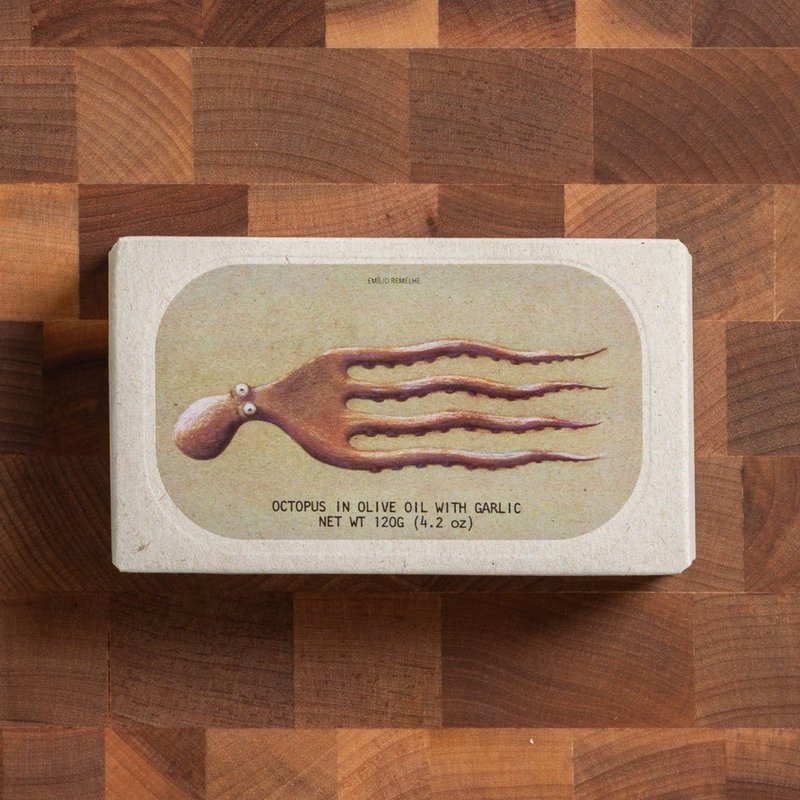
FishNook has the Luliña Octopus on sale.
Octopus in Olive Oil w/ Garlic
Luliña octopus from Galicia, in olive oil with garlic and chili. FishNook is moving inventory across the board this week. This one is worth grabbing at $14.99.
$14.99
$22.99
35% OFF
|
|
|
|
The Find
Found my first piece of struvite
On r/CannedSardines this week, someone opened a tin and found glass-like crystals inside. The thread filled up fast: alarm, then relief, then curiosity. Struvite is magnesium ammonium phosphate, a harmless compound that forms naturally during sterilization. Your stomach acid dissolves it in minutes. AllTinned's Is It Still Good guide covers exactly this, and everything else worth knowing before you open a tin. |
|
|
The Radar
Tinventory
Someone in the community built a tin tracker. Log what you have, track what you have tried, build a wishlist. Free, and worth knowing about if you are keeping a collection.
Visit →
|
|
|
The Close
Next week: One of the most common fish in the tins. And why you will want to stock up.
|
|
|
Was this issue useful?
Yes →
No →
|
|
|
Writing about tinned fish? Our data is quotable with attribution. Reply to this email.
© 2026 MrTinned. All rights reserved.
PO Box 2941, Winnetka, CA 91396, US
|